
Key facts
- Is modafinil a controlled substance? Yes. In the US, modafinil is a federally controlled Schedule IV prescription medicine, and it has been since January 27, 1999. See our complete modafinil guide for its uses and safety.
- Armodafinil (Nuvigil) is covered too, because the DEA listing includes modafinil’s isomers.
- Schedule IV means low abuse potential compared with Schedule III drugs, but not zero. Adderall and Ritalin sit higher, in Schedule II.
- For you as a patient, it means a valid prescription, no more than 5 refills, and a 6-month limit on each prescription.
- Having modafinil without a valid prescription is a federal crime, and online sellers that skip the prescription are operating illegally.
People often ask “is modafinil a controlled substance?” because it doesn’t feel like a typical stimulant. It’s prescribed for sleepiness, not ADHD, and it’s often described as gentler than amphetamines. The short answer is yes. Federal law places modafinil in Schedule IV of the Controlled Substances Act. This guide explains what that label means, why the DEA chose it, how modafinil compares with other wake-promoting drugs, and what it changes when you fill a prescription. If you’re new to the medicine itself, start with our modafinil overview, then come back here for the legal side.
Is modafinil a controlled substance in the US?
Yes. The DEA’s list of Schedule IV drugs at 21 CFR 1308.14 names modafinil (DEA code 1680) in the stimulants section. That section covers “its salts, isomers and salts of isomers,” so armodafinil, the longer-acting R-isomer sold as Nuvigil, falls under the same rule. The DEA’s own alphabetical list of controlled substances (October 2026 edition) also shows modafinil as Schedule IV and not a narcotic.
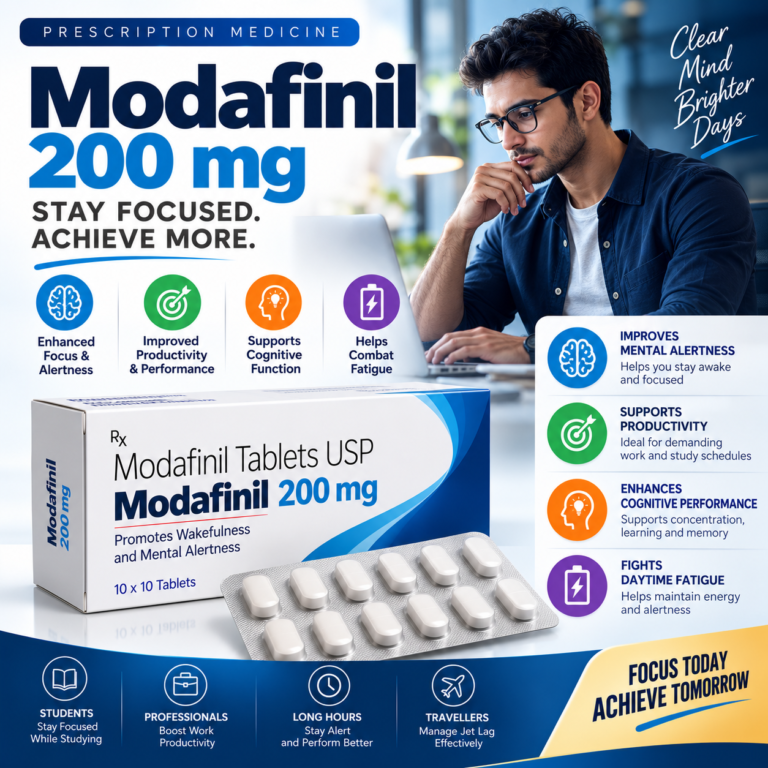
The FDA-approved modafinil label says the same thing. It’s marked “C-IV” at the top, and section 9.1 states that the tablets contain “a Schedule IV controlled substance.” Modafinil is FDA-approved to improve wakefulness in adults with excessive sleepiness from narcolepsy, obstructive sleep apnea, or shift work disorder. It comes in 100 mg and 200 mg tablets.
When and how it was scheduled
Modafinil was controlled before it ever reached US pharmacies. The timeline from the DEA’s 1999 final rule runs like this:
- December 22, 1997: the Department of Health and Human Services recommended Schedule IV, based on an FDA review of the eight factors the law requires.
- April 14, 1998: the DEA proposed Schedule IV, to take effect only if the FDA approved the drug.
- December 24, 1998: the FDA approved Provigil for sleepiness caused by narcolepsy.
- January 27, 1999: Schedule IV took effect.
The manufacturer didn’t object to the schedule itself. It only asked the DEA to clarify how the drug’s effects were described.
Why the DEA put modafinil in Schedule IV
Under 21 U.S.C. 812, a Schedule IV drug has a currently accepted medical use, a low potential for abuse relative to Schedule III, and abuse that may lead to limited physical or psychological dependence relative to Schedule III. Modafinil met all three tests, for reasons that pull in two directions.
Why it’s controlled at all. In the 1998 proposal, the DEA said modafinil produces many of the same effects and side effects as classic stimulants like amphetamine and methylphenidate. Animals self-administer it, and people can feel euphoria and changes in mood and thinking. The current FDA label adds that modafinil binds the dopamine reuptake site. In a study of people experienced with drugs of abuse, it produced effects “consistent with” methylphenidate. A 2009 brain-imaging study in JAMA found that ordinary 200 mg and 400 mg doses blocked dopamine transporters and raised dopamine in the brain’s reward area. The authors urged awareness of possible abuse in vulnerable people.
Why it’s not higher. The DEA also found that modafinil is 50 to 100 times less potent than Schedule II stimulants. It doesn’t dissolve in water and breaks down with heat, which makes snorting, smoking, or injecting it unlikely. At the time, the agency knew of no reports of modafinil abuse. In a 9-week trial described on the label, no withdrawal symptoms appeared during 14 days off the drug, although sleepiness returned in people with narcolepsy. MedlinePlus still warns that modafinil “may be habit-forming.”
How modafinil compares with other wake-promoting drugs
A lot of confusion clears up once you see modafinil next to its neighbors. Schedules come from 21 CFR Part 1308 and the DEA’s October 2026 list.
| Medicine | Federal status | What it means for refills |
|---|---|---|
| Modafinil (Provigil), armodafinil (Nuvigil) | Schedule IV | Up to 5 refills within 6 months |
| Solriamfetol (Sunosi) | Schedule IV | Up to 5 refills within 6 months |
| Sodium oxybate products (Xyrem, Xywav) | Schedule III (prescription products) | Up to 5 refills within 6 months, plus a special REMS program |
| Amphetamine (Adderall), lisdexamfetamine (Vyvanse), methylphenidate (Ritalin, Concerta) | Schedule II | No refills; a new prescription each time |
| Pitolisant (Wakix) | Not on the DEA’s controlled substance list | Normal prescription rules |
| Caffeine | Not controlled | Sold over the counter |
For a closer look at the two most common comparisons, see modafinil vs Adderall and modafinil vs armodafinil.
What Schedule IV means when you fill a prescription
The schedule shapes several practical steps:
- Refill limits. Under 21 CFR 1306.22, a Schedule III or IV prescription can’t be filled more than 6 months after it was written, or refilled more than 5 times. After that, you need a new prescription.
- Monitoring. Pharmacies report controlled-substance fills to your state’s prescription drug monitoring program, which prescribers and pharmacists can check. Many pharmacies also ask for photo ID at pickup.
- Telehealth. A DEA temporary rule published December 31, 2025 lets DEA-registered clinicians prescribe Schedule II–V drugs over audio-video telehealth without a prior in-person visit through December 31, 2026. A permanent rule had not been published as of November 2, 2026, so ask your clinic how it will handle visits after that date. You still need a real evaluation; a quick online questionnaire isn’t one.
- State rules. States can add their own requirements on top of federal law, so your pharmacist may follow extra steps where you live.
Our guide to getting modafinil lawfully for narcolepsy walks through diagnosis, insurance, and choosing a licensed pharmacy.
Is it illegal to have modafinil without a prescription?
Yes. Under 21 U.S.C. 844, it’s unlawful to possess a controlled substance unless you got it through a valid prescription from a practitioner. A first offense can bring up to a year in prison and a fine of at least $1,000. Selling or sharing pills carries heavier penalties. Giving a friend one of your tablets counts as distribution, even if no money changes hands.
Ordering from overseas or “no prescription” websites doesn’t get around this. The FDA notes that importing drugs for personal use is illegal in most circumstances, and the DEA decides questions about controlled substances. The FDA’s BeSafeRx guidance lists the warning signs: no prescription required, no US address, no licensed pharmacist, and prices that seem too good to be true. Pills from those sites may contain the wrong dose, the wrong drug, or contaminants.
When to get help right away. Call 911 for chest pain, a racing or irregular heartbeat, fainting, trouble breathing, swelling of the face or throat, or a blistering or peeling rash. These can be signs of a heart problem or a serious allergic or skin reaction, which the modafinil label warns about. For a possible overdose or a child who swallowed a tablet, call Poison Help at 1-800-222-1222. If you’re having thoughts of harming yourself, call or text 988.
Questions to ask your prescriber
- Is modafinil the right first choice for my diagnosis, or should we consider a non-controlled option such as pitolisant?
- How many refills will my prescription have, and when will I need a new one?
- Can my follow-up visits happen by telehealth, and what changes after December 31, 2026?
- Will my insurance need prior authorization, and is the generic covered?
- How should I store my tablets safely at home, and what should I do with leftovers?
- Does modafinil interact with my other medicines, including birth control? (The label says hormonal birth control may work less well during use and for one month after stopping.)
To review possible reactions before you start, see our guide to modafinil side effects.
FAQ
Is modafinil a controlled substance in the US?
Yes. Modafinil is a Schedule IV controlled substance under federal law and has been since January 27, 1999. It can only be dispensed by a licensed pharmacy with a valid prescription.
Is armodafinil also a controlled substance?
Yes. The federal Schedule IV listing for modafinil includes its isomers, and armodafinil (Nuvigil) is the R-isomer of modafinil, so the same rules apply.
Why is modafinil Schedule IV and not Schedule II like Adderall?
The DEA found that modafinil has stimulant-like effects and some abuse potential, but it is far less potent than Schedule II stimulants and hard to misuse by snorting or injecting, so its abuse potential was judged similar to other Schedule IV stimulants.
How many refills can I get on a modafinil prescription?
Federal rules allow up to 5 refills, and no fill or refill more than 6 months after the prescription was written. Your prescriber decides how many refills to authorize, and state rules can be stricter.
Is it legal to buy modafinil online without a prescription?
No. Possessing modafinil without a valid prescription is a federal offense, and websites that sell it without one are operating illegally. Use a state-licensed pharmacy and check it with the FDA BeSafeRx resources.
Related guides
- Modafinil Explained: Uses, How It Works and Safety
- Modafinil Side Effects: Common, Rare and When to Get Help
- Modafinil vs Armodafinil: What’s the Difference?
- Modafinil vs Adderall (and Vyvanse, Ritalin): How They Differ
- How to Buy Modafinil for Narcolepsy Treatment (Prescription Required)
- Modafinil for Narcolepsy: How It Treats Excessive Daytime Sleepiness
- Modafinil for Idiopathic Hypersomnia, ADHD and MS Fatigue: What the Evidence Says
- Is Tapentadol a Narcotic? Schedule II Explained
- How Modafinil Works: Mechanism, Half-Life and How Long It Lasts
- Modafinil Dosage: What the FDA Label Says
- Modafinil Interactions: Alcohol, Birth Control and Caffeine
- The “Smart Drug” Myth: Modafinil in Healthy People
- How to Get a Modafinil Prescription: Sleep Studies, Telehealth and Insurance
Sources
- eCFR: 21 CFR 1308.14, Schedule IV
- DEA Diversion Control Division: Controlled Substances, Alphabetical Order (October 2026)
- DailyMed: Modafinil tablets prescribing information (revised 4/2024)
- Federal Register 64 FR 4050 (January 27, 1999): Placement of Modafinil Into Schedule IV
- Federal Register 63 FR 18170 (April 14, 1998): Proposed Placement of Modafinil Into Schedule IV
- 21 U.S.C. 812: Schedules of controlled substances (govinfo)
- Volkow ND, et al. Effects of modafinil on dopamine and dopamine transporters in the male human brain. JAMA. 2009
- MedlinePlus: Modafinil
- eCFR: 21 CFR 1306.22, Refilling of prescriptions
- CDC: Prescription Drug Monitoring Programs
- Federal Register (December 31, 2025): Fourth Temporary Extension of COVID-19 Telemedicine Flexibilities
- 21 U.S.C. 844: Penalties for simple possession (govinfo)
- FDA: Personal Importation
- FDA BeSafeRx: Considering an Online Pharmacy?