
Key facts
- Tapentadol for pain in one line: a prescription opioid (brand Nucynta) used for severe pain when other treatments have not worked well enough. Our tapentadol guide covers the basics.
- FDA-approved uses: severe acute pain (immediate-release tablets), and severe, persistent pain or diabetic nerve pain that needs long-term opioid treatment (Nucynta ER).
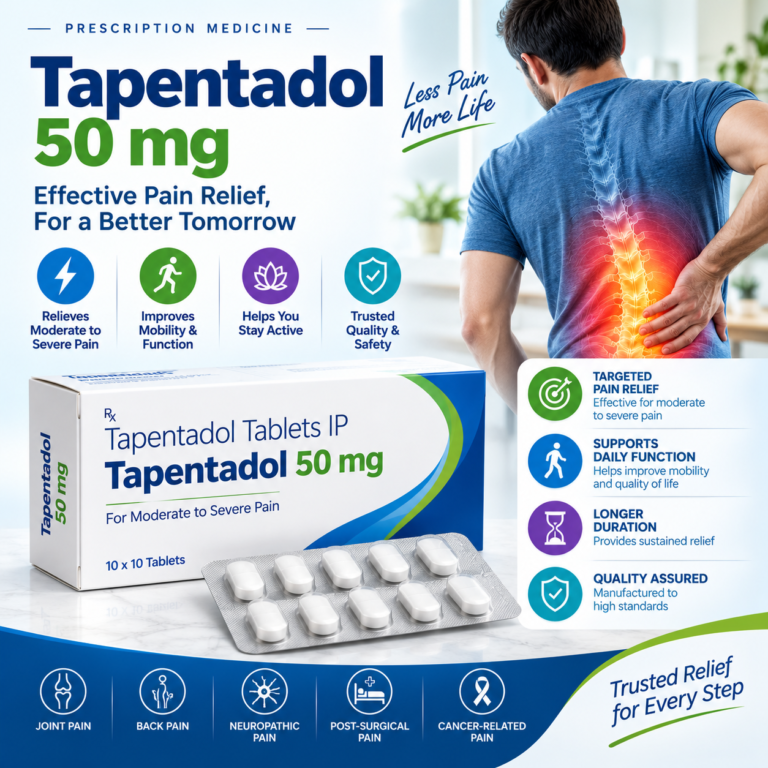
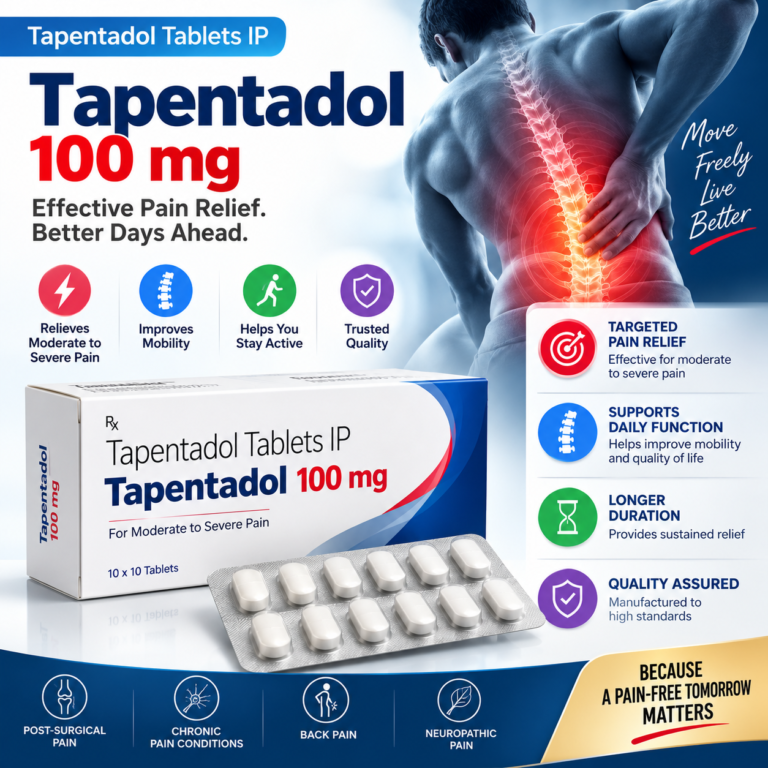
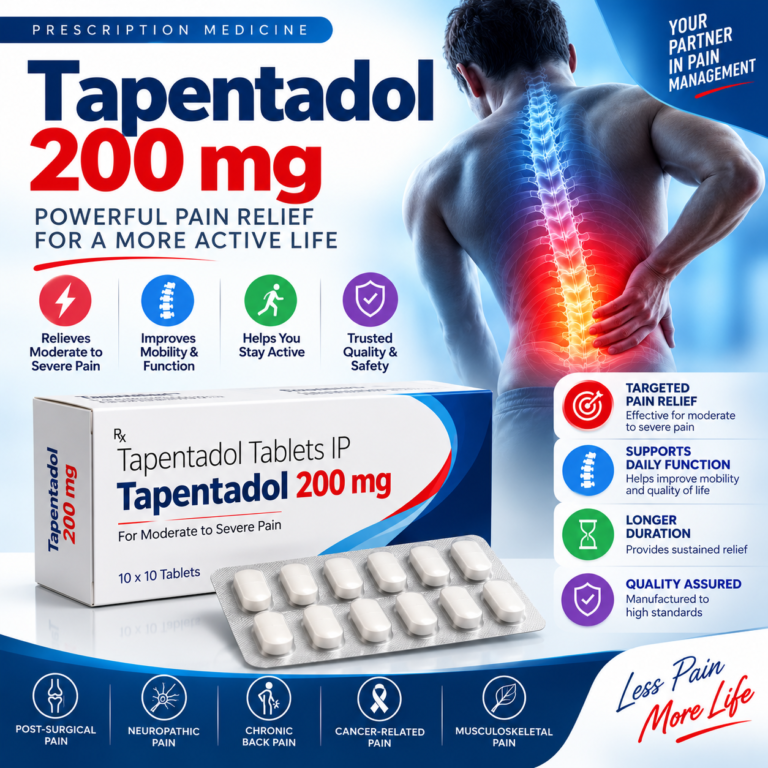
- US strengths: immediate-release 50, 75 and 100 mg; extended-release 50, 100, 150, 200 and 250 mg.
- It is a Schedule II controlled substance with a boxed warning for addiction, breathing problems and dangerous mixing with alcohol, benzodiazepines and other sedatives.
- US guidelines say non-opioid treatments should come first for most pain.
Prescription required. Tapentadol (Nucynta) is a federally controlled prescription opioid (Schedule II). In the US it can only be dispensed by a state-licensed pharmacy against a valid prescription from a DEA-registered prescriber who has evaluated you. Websites that sell it without a prescription are operating illegally, and counterfeit opioid pills may contain fentanyl.
If your doctor has mentioned tapentadol for pain, or you have just been handed a prescription after surgery, you probably want to know two things: is this the right medicine for the kind of pain I have, and what happens once I start taking it? This guide answers both in plain language, using the current FDA labels and US guidelines. It is meant to help you have a better conversation with your prescriber, not to replace one.
What kinds of pain is tapentadol for?
Tapentadol works in two ways at once. It switches on the body’s mu-opioid receptors, like other opioids, and it also blocks the reuptake of norepinephrine, a nerve chemical that helps dampen pain signals in the spinal cord. That second action is one reason it has been studied for nerve pain as well as pain from injury or surgery. The FDA has approved it for three situations:
| Product | What it is approved for | How it is usually taken |
|---|---|---|
| Nucynta (immediate-release tablets, 50/75/100 mg) | Acute pain severe enough to need an opioid, when other treatments are inadequate. Adults, and children 6 and older who weigh at least 40 kg (about 88 lb). | Every 4 to 6 hours as needed, for a short period |
| Nucynta ER (extended-release tablets, 50 to 250 mg) | Severe and persistent pain in adults that needs an opioid and cannot be adequately treated with other options, including immediate-release opioids | About every 12 hours, on a schedule |
| Nucynta ER | Severe and persistent nerve pain from diabetic peripheral neuropathy (DPN) in adults, with the same “other options first” condition | About every 12 hours, on a schedule |
The wording comes from the Nucynta tablets label and the Nucynta ER label, both revised in December 2025. Typical examples of acute pain are the first days after surgery, a fracture or a serious injury. Tapentadol is not meant for occasional, as-needed use for everyday aches, headaches or mild back pain.
Why “other options first” matters
Both labels say tapentadol should be used only when other treatments are not enough. That matches the CDC’s 2022 opioid prescribing guideline, which states that non-opioid therapies are at least as effective as opioids for many common types of acute pain, and that non-opioid therapies are preferred for subacute and chronic pain. Depending on the cause, that can mean acetaminophen or an NSAID, ice or heat, physical therapy, exercise, nerve-pain medicines, injections, or treating the underlying condition. In July 2025 the FDA went further for long-term use, asking opioid makers to make clear that extended-release opioids are only for severe, persistent pain when alternatives, including immediate-release opioids, are inadequate (FDA Drug Safety Communication, July 31, 2025).
What the research shows about tapentadol for pain
The studies behind the FDA approvals give a realistic picture of what tapentadol can and cannot do.
- After surgery: in a trial of 269 people recovering from bunion surgery, tapentadol IR 50 mg and 100 mg and oxycodone IR 10 mg all relieved pain better than placebo. At 50 mg, tapentadol caused less nausea (46% vs 72%), vomiting (16% vs 39%) and constipation (6% vs 18%) than oxycodone, at similar pain relief (Stegmann et al., 2008). Stomach side effects were still common.
- Diabetic nerve pain: in a 588-person trial of tapentadol ER, about 6 in 10 people had at least a 30% drop in pain during the first three weeks. People who kept taking it held their improvement better than those switched to placebo over the next 12 weeks (Schwartz et al., 2011). A second trial found similar results, with nausea (21%) and vomiting (13%) as the most common side effects (Vinik et al., 2014).
Two caveats are worth knowing. Most of these trials were funded by the companies that make tapentadol, and the nerve-pain trials only kept people who responded in the first weeks, which tends to make results look better. Tapentadol is a real option for some people, but it is not pain-free, side-effect-free or risk-free. For a closer look at how it compares with a similar dual-action medicine, see tapentadol vs tramadol.
Who should not take tapentadol
According to the FDA labels and MedlinePlus, tapentadol should not be used, or needs extra caution, if you:
- have taken an MAO inhibitor (such as phenelzine, selegiline, linezolid or methylene blue) in the past 14 days
- have severe asthma, serious breathing problems, or a blockage in the stomach or bowel
- have severe liver or kidney disease (generally not recommended) or moderate liver disease (lower or less frequent doses)
- take benzodiazepines, sleep medicines, gabapentin or pregabalin, muscle relaxants, other opioids, or drink alcohol
- take antidepressants that affect serotonin, because of the risk of serotonin syndrome
- have a history of seizures, head injury, or substance use disorder, or are pregnant or breastfeeding
What to expect when you start
Before the first dose
Your prescriber should ask about your pain, other medicines, alcohol use and any history of substance use, and will usually check your state’s prescription drug monitoring program (PDMP). Because tapentadol is Schedule II, prescriptions cannot be refilled; each fill needs a new written or electronic prescription. Your pharmacist will give you a Medication Guide, which is part of the FDA’s opioid safety program (REMS). Read it. Our guide to getting tapentadol legally explains the prescription and pharmacy steps in detail.
The first days and weeks
- Dosing: take it exactly as your label says. The FDA label for the IR tablets lists 50 to 100 mg every 4 to 6 hours as needed. ER tablets are taken about every 12 hours and must be swallowed whole; crushing, chewing or breaking them can release a dangerous dose at once.
- Common side effects: nausea, dizziness, sleepiness, constipation, vomiting and headache. Many ease within a few days. See tapentadol side effects for the full list.
- Driving and work: do not drive or use machinery until you know how it affects you.
- Follow-up: for short-term pain, expect to need it for only a few days. For long-term treatment, expect regular check-ins to see whether it is still helping your pain and daily function, and whether the dose can be lowered. Do not stop suddenly after regular use; your prescriber will plan any dose reduction with you.
Keep naloxone at home
The FDA now asks prescribers to discuss overdose reversal medicines with everyone prescribed an opioid. Naloxone nasal spray has been sold over the counter since March 2023 (FDA). Tell the people you live with where it is and how to use it. Store tapentadol locked away from children and visitors, and dispose of leftovers through a take-back site; if none is available, tapentadol is on the FDA flush list.
Call 911 right away if someone taking tapentadol has slow, shallow or noisy breathing, blue or gray lips, pinpoint pupils, or cannot be woken up. Give naloxone if you have it, and stay with them. Also get urgent help for a seizure, or for agitation, fever, fast heartbeat, stiff or twitching muscles and diarrhea, which can signal serotonin syndrome. For questions about an accidental dose, call Poison Help at 1-800-222-1222. If you are struggling with opioid use or thoughts of harming yourself, call or text 988.
Questions to ask your prescriber
- What is causing my pain, and which non-opioid treatments should I try first or alongside this?
- Why tapentadol rather than another option, and is it IR or ER?
- How long should I expect to take it, and when will we review whether it is working?
- Do any of my current medicines, including antidepressants, gabapentin or sleep aids, interact with it?
- Should I have naloxone at home, and will you prescribe it or should I buy it over the counter?
- What should I do with leftover tablets when I no longer need them?
Remember: tapentadol is a Schedule II prescription opioid that can only be dispensed by a state-licensed pharmacy with a valid prescription from a DEA-registered prescriber who has evaluated you.
Frequently asked questions
Is tapentadol good for chronic back pain?
Tapentadol ER is approved for severe, persistent pain only when other options, including immediate-release opioids, are inadequate. US guidelines prefer non-opioid treatments such as exercise, physical therapy and NSAIDs for most chronic back pain, so it is not a first choice.
Does tapentadol help nerve pain?
The extended-release form, Nucynta ER, is FDA-approved for severe, persistent nerve pain from diabetic peripheral neuropathy in adults when other treatments are not enough. It is not approved for other types of nerve pain.
How often is tapentadol taken?
Immediate-release tablets are usually taken every 4 to 6 hours as needed for short-term pain. Extended-release tablets are taken about every 12 hours on a regular schedule. Always follow the directions on your own prescription label.
Is tapentadol safer than oxycodone?
In some trials tapentadol caused less nausea, vomiting and constipation than oxycodone at similar pain relief. It still carries the same serious opioid risks, including addiction, overdose and dangerous breathing problems.
Can tapentadol be refilled?
No. Tapentadol is a Schedule II controlled substance, so federal rules do not allow refills. Each fill needs a new written or electronic prescription from your prescriber.
Related guides
- Tapentadol (Nucynta): Uses, How It Works and Safety
- Tapentadol Side Effects and Boxed Warnings Explained
- Tapentadol vs Tramadol: Key Differences
- How to Buy Tapentadol for Pain Relief Legally: US Prescription Rules
- Tapentadol vs Oxycodone and Hydrocodone
- Is Tapentadol a Narcotic? Schedule II Explained
- Nucynta IR vs ER: Approved US Strengths (and Why “200 mg” Pills Are a Red Flag)
- Tapentadol Interactions: Serotonin Syndrome, Benzodiazepines and Alcohol
- Tapentadol Dependence, Withdrawal and Safe Tapering
- Opioid Overdose Signs and Naloxone: What Every Household Should Know
- Safe Storage and Disposal of Opioids at Home
- Tapentadol Prescription Requirements: Schedule II Rules, Refills and Telehealth
- Buying Opioids Online: Counterfeits, Fentanyl and US Law
Sources
- Nucynta (tapentadol) tablets prescribing information, revised 12/2025. DailyMed, National Library of Medicine.
- Nucynta ER (tapentadol) extended-release tablets prescribing information, revised 12/2025. DailyMed, National Library of Medicine.
- Tapentadol. MedlinePlus Drug Information, last revised 09/15/2026.
- CDC Clinical Practice Guideline for Prescribing Opioids for Pain, United States, 2022. MMWR Recommendations and Reports, November 4, 2022.
- FDA requiring opioid pain medicine manufacturers to update prescribing information regarding long-term use. FDA Drug Safety Communication, July 31, 2025.
- Stegmann JU, et al. Multiple-dose tapentadol immediate release for acute pain after bunionectomy. Curr Med Res Opin. 2008;24(11):3185-96.
- Schwartz S, et al. Tapentadol ER in painful diabetic peripheral neuropathy: a randomized-withdrawal, placebo-controlled trial. Curr Med Res Opin. 2011;27(1):151-62.
- Vinik AI, et al. Tapentadol extended release in chronic painful diabetic peripheral neuropathy. Diabetes Care. 2014;37(8):2302-9.
- Information about naloxone and nalmefene. US Food and Drug Administration.
- Drug disposal: FDA’s flush list for certain medicines. US Food and Drug Administration.