Key facts
- Zopiclone vs zolpidem (Ambien) vs zaleplon (Sonata): all three are “Z-drugs,” non-benzodiazepine sleep medicines acting on the same GABA-A receptor site as benzodiazepines.
- Zolpidem and zaleplon are FDA-approved and sold in the US. Zopiclone has never been FDA-approved; its US relative is eszopiclone (Lunesta).
- The biggest practical difference is how long each lasts: zaleplon about 1 hour, zolpidem about 2.5 hours, zopiclone about 5 hours, eszopiclone about 6 hours.
- All US Z-drugs carry an FDA boxed warning for complex sleep behaviors such as sleepwalking and sleep-driving, and all are Schedule IV controlled substances.
- Guidelines put CBT-I, not a pill, first for chronic insomnia.
If you have seen zopiclone mentioned online or were prescribed it abroad, you may be wondering how it stacks up against the zolpidem (Ambien) your US doctor talks about. This guide compares zopiclone vs zolpidem, and adds zaleplon, the third Z-drug, so you can see how they differ in speed, duration, side effects and US legal status. For background on zopiclone itself, start with our zopiclone guide.
The short version: the three drugs work in a similar way, but they last different lengths of time, and only two of them are available in US pharmacies. Those two facts drive most of the real-world differences.
What the Z-drugs have in common
Z-drugs were developed as alternatives to older benzodiazepine sleeping pills. Chemically they are not benzodiazepines, but they bind to the benzodiazepine site on GABA-A receptors, the brain’s main “slow down” system. The Ambien prescribing information describes zolpidem as a positive modulator at receptors containing the alpha-1 subunit, and the zaleplon label on DailyMed describes the same preference. A 2003 review in Drug Safety notes that this selectivity was expected to cause fewer memory and thinking problems than benzodiazepines, while warning that all three should still be used for limited periods.
They share the same core risks: next-day drowsiness, impaired driving, falls, dependence and dangerous sleep behaviors.
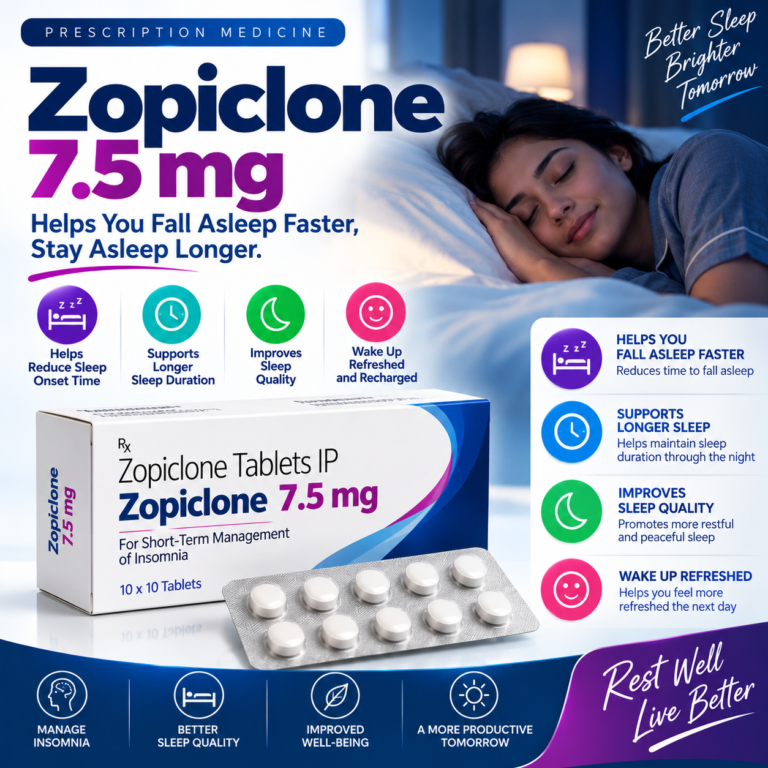
Zopiclone vs zolpidem vs zaleplon at a glance
| Zopiclone | Zolpidem (Ambien) | Zaleplon (Sonata) | Eszopiclone (Lunesta) | |
|---|---|---|---|---|
| FDA-approved in the US? | No | Yes (since 1992) | Yes | Yes (since 2004) |
| Approximate half-life | About 5 hours | About 2.5 hours | About 1 hour | About 6 hours (about 9 in people 65+) |
| Helps you fall asleep | Yes | Yes | Yes | Yes |
| Helps you stay asleep | Yes | Yes | Not shown | Yes |
| Signature side effect | Bitter or metallic taste | Next-morning impairment, especially in women | Fewer morning effects but shorter action | Unpleasant taste |
| US controlled-substance schedule | Schedule IV | Schedule IV | Schedule IV | Schedule IV |
| FDA boxed warning for complex sleep behaviors | Not applicable (not FDA-approved) | Yes | Yes | Yes |
Half-lives come from the Drug Safety review above and the US labels for Ambien and Lunesta. The “fall asleep” and “stay asleep” rows for the US drugs follow the American Academy of Sleep Medicine 2017 insomnia drug guideline, which made only weak recommendations for every sleep medicine it reviewed.
Duration: the difference that matters most
A sleep medicine’s half-life tells you roughly how long it keeps working, and how much may still be in your system when the alarm goes off.
Zaleplon: the shortest
With a half-life of about 1 hour, zaleplon mainly helps people who struggle to fall asleep. MedlinePlus notes that it does not help you stay asleep or reduce night-time waking. Its short action is also why it tends to leave fewer morning effects.
Zolpidem: in the middle
Zolpidem peaks in about 1.6 hours and has a half-life of about 2.5 hours, according to its label. The AASM guideline lists it for both falling asleep and staying asleep. An extended-release version (Ambien CR) is designed to last longer through the night.
Zopiclone and eszopiclone: the longest
Zopiclone’s half-life of about 5 hours, and eszopiclone’s of about 6, mean better coverage of the whole night but more risk of a groggy morning. Zopiclone 7.5 mg is so reliably impairing the next morning that researchers use it as the “positive control” in driving studies. A 2011 review of on-the-road driving tests found it caused more weaving than a blood alcohol level of 0.05%.
Effectiveness: what head-to-head research shows
There are few direct comparisons of zopiclone vs zolpidem. The largest double-blind trial, a 14-day study of 479 adults in Japan, compared zolpidem 10 mg with zopiclone 7.5 mg. Zolpidem was at least as effective. It also caused fewer drug-related side effects (31.3% vs 45.3%) and less rebound trouble falling asleep after stopping. Bitter taste made up nearly 40% of the side-effect complaints in the zopiclone group.
The trial was short and used a 10 mg zolpidem dose the FDA later lowered for women (see below), so it says little about months of nightly use.
Side effects compared
- Taste: a bitter or metallic taste is the hallmark of zopiclone and eszopiclone. The Lunesta label reports unpleasant taste in 34% of adults on 3 mg, compared with 3% on placebo. It is much less common with zolpidem. See our zopiclone side effects guide for more.
- Next-day impairment: possible with all of them, more likely with longer-acting drugs and higher doses. The Lunesta label warns that impairment “can occur in the absence of symptoms,” so feeling fine is not proof you are safe to drive.
- Dizziness and drowsiness: the most common short-term effects listed on the Ambien label.
- Falls and fractures: a 2018 meta-analysis found Z-drug users had higher odds of fractures (odds ratio 1.63) than non-users, a key concern for older adults.
- Dependence and withdrawal: the US labels warn of withdrawal effects if the drug is stopped suddenly after regular use. Changes to how you stop should be planned with your prescriber.
US safety rules that apply to every Z-drug
The 2019 boxed warning
On April 30, 2019, the FDA added its strongest warning to eszopiclone, zaleplon and zolpidem after identifying 66 cases of complex sleep behaviors with serious injuries, including 20 deaths. These include sleepwalking, sleep-driving and other activities done while not fully awake. Anyone who has had such an episode on one of these drugs should not take any of them again.
Lower zolpidem doses for women
In January 2013, the FDA required lower recommended zolpidem doses because women clear the drug more slowly. The recommended dose for women fell from 10 mg to 5 mg for immediate-release products and from 12.5 mg to 6.25 mg for extended-release products. For men, prescribers were told to consider the lower doses too. The current Ambien label lists 5 mg as the starting dose for women and 5 or 10 mg for men, with 10 mg as the maximum.
Timing rules
All three US labels say to take the medicine right before bed with 7 to 8 hours left for sleep, and not with or just after a heavy meal, which slows absorption. Zaleplon’s label also allows a dose after you have gone to bed and found you cannot fall asleep, as long as you can still stay in bed for a full night.
Where zopiclone fits for US readers
Zopiclone is widely prescribed in the UK, Canada and elsewhere, but it has never been approved by the FDA, so US pharmacies do not stock it. It is listed in Schedule IV of the federal Controlled Substances Act. Eszopiclone (Lunesta), the active half of the zopiclone molecule, is the FDA-approved US equivalent; our zopiclone vs eszopiclone guide explains how the two compare. If you took zopiclone abroad and want something similar in the US, the right step is to tell your US prescriber exactly what you took and how it worked for you. Do not order it online.
Which one is “better”?
When people search zopiclone vs zolpidem, they usually want a winner. None is best for everyone. The choice depends on your sleep pattern, age, other medicines and morning responsibilities:
- Trouble falling asleep only: a short-acting option may be enough.
- Waking in the night: a longer-acting option may help more, at the cost of more morning grogginess.
- Early driving or safety-critical work: shorter action and lower doses matter more.
- Age 65 or older: lower doses are standard, and the fall risk weighs heavily.
For chronic insomnia, the American College of Physicians recommends cognitive behavioral therapy for insomnia (CBT-I) as the first treatment, before any of these drugs.
Get emergency help (call 911) if someone who took a sleep medicine is very hard to wake, has slow or shallow breathing, or took it with alcohol, opioids or other sedatives and seems confused or unresponsive. For questions about a possible overdose or a wrong dose, call Poison Help at 1-800-222-1222. If you have woken up to find you drove, cooked or did anything else without remembering it, stop the medicine and contact your prescriber right away.
Questions to ask your prescriber
- Is my main problem falling asleep, staying asleep, or both, and which medicine fits that pattern?
- What is the lowest dose I can start with, and how long should I take it?
- How many hours should I wait before driving the next morning?
- Do any of my other medicines, including over-the-counter sleep aids, interact with this one?
- Can you refer me for CBT-I?
- If I want to stop, how should we do it?
Frequently asked questions
Is zopiclone stronger than zolpidem?
Not exactly. At usual doses they work in a similar way, but zopiclone lasts longer (half-life about 5 hours vs about 2.5 hours), so it is more likely to cause next-morning grogginess and impaired driving. In the largest head-to-head trial, zolpidem was at least as effective and caused fewer side effects.
Can I get zopiclone in the US?
No. Zopiclone has never been approved by the FDA and is not sold in US pharmacies. The closest US option is eszopiclone (Lunesta), which a prescriber can discuss with you along with other treatments such as CBT-I.
Which Z-drug wears off fastest?
Zaleplon (Sonata). Its half-life is about 1 hour, so it mainly helps with falling asleep and is less likely to cause morning drowsiness, though it can still impair alertness.
Why is the zolpidem dose lower for women?
Women clear zolpidem from the body more slowly than men, so more of the drug may remain in the morning. In 2013 the FDA lowered the recommended immediate-release dose for women from 10 mg to 5 mg.
Are Z-drugs safer than benzodiazepines?
They were designed to have fewer effects on memory, but they share many of the same risks, including dependence, falls, impaired driving and dangerous sleep behaviors. They should be used at the lowest dose for the shortest time your prescriber recommends.
Related guides
- Zopiclone: What It Is and Why It Isn’t Sold in the US
- Zopiclone vs Eszopiclone (Lunesta): The US Equivalent Explained
- Zopiclone Side Effects: Metallic Taste, Next-Day Drowsiness and More
- Can You Buy Zopiclone for Insomnia in the US? Prescription Rules and Legal Options
- Zopiclone for Insomnia: How It Works and What US Patients Use Instead
- Is Zopiclone a Benzodiazepine?
- Complex Sleep Behaviors: The FDA Boxed Warning on Z-Drugs
- Zopiclone Dependence, Tolerance and Withdrawal
- Zopiclone and Alcohol, Opioids and Other Interactions
- Sleep Medicines in Older Adults: Falls and the Beers Criteria
- CBT-I and Non-Drug Insomnia Treatments
- Bringing Zopiclone into the US: FDA and DEA Import Rules
- Getting a Lunesta (Eszopiclone) Prescription for Insomnia
Sources
- FDA. Ambien (zolpidem tartrate) prescribing information.
- FDA. Lunesta (eszopiclone) prescribing information.
- DailyMed. Zaleplon capsules label.
- MedlinePlus. Zaleplon.
- FDA. Boxed warning for complex sleep behaviors with certain insomnia medicines (April 30, 2019).
- FDA. Questions and answers: lower recommended doses for zolpidem.
- Sateia MJ, et al. AASM clinical practice guideline for the pharmacologic treatment of chronic insomnia in adults. J Clin Sleep Med. 2017 (guideline at a glance).
- Terzano MG, et al. New drugs for insomnia: comparative tolerability of zopiclone, zolpidem and zaleplon. Drug Saf. 2003.
- Tsutsui S, et al. A double-blind comparative study of zolpidem versus zopiclone in chronic primary insomnia. J Int Med Res. 2001.
- Verster JC, et al. Zopiclone as positive control in studies of residual effects on driving. Curr Drug Saf. 2011.
- Treves N, et al. Z-drugs and risk for falls and fractures in older adults. Age Ageing. 2018.
- American College of Physicians. ACP recommends CBT as initial treatment for chronic insomnia (2016).